

Made to measure
Curtains
Almost everyone starts with the fabric, and the fabric is the last thing that should be decided.
It is the enjoyable part, so it gets chosen first and everything else is fitted around it. Then the track will not carry the weight, or the heading will not hold that cloth in a fold, or the open curtain sits across a third of the glass you paid a premium for. None of that is fixable without starting again.
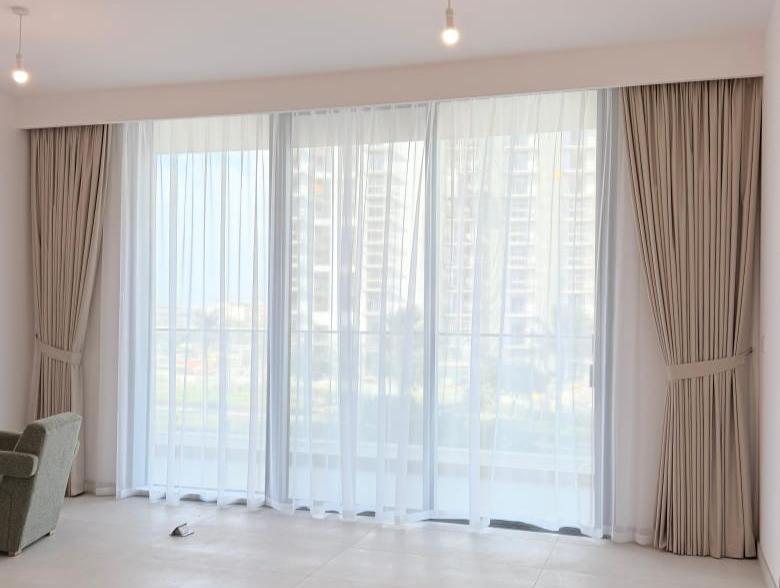
Motorised Wave Track
Free measurement & quote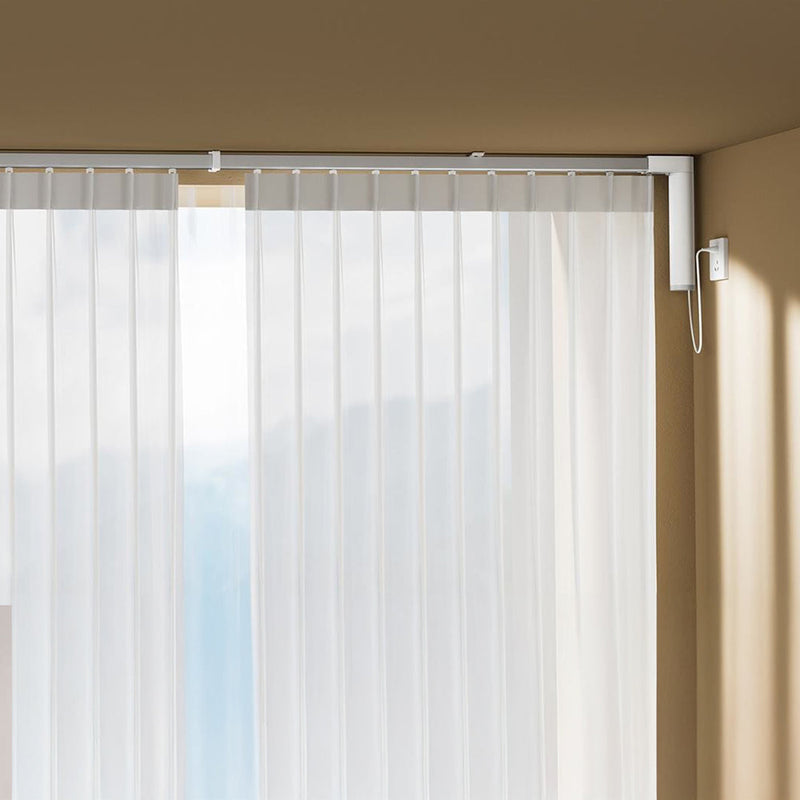
Wired Motorised Curtain System
Free measurement & quote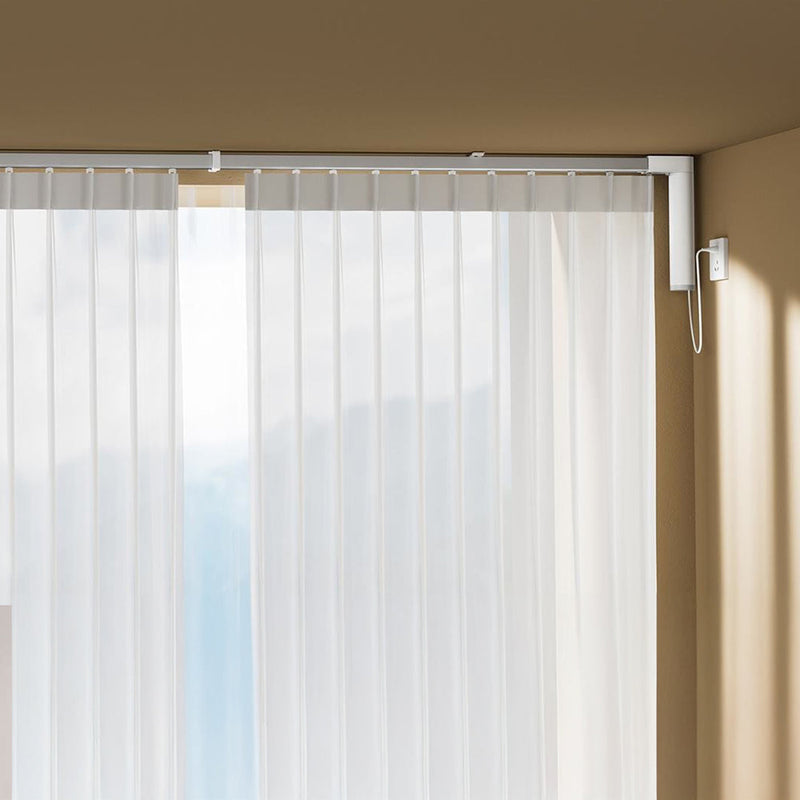
Battery Curtain Motor Retrofit
Free measurement & quote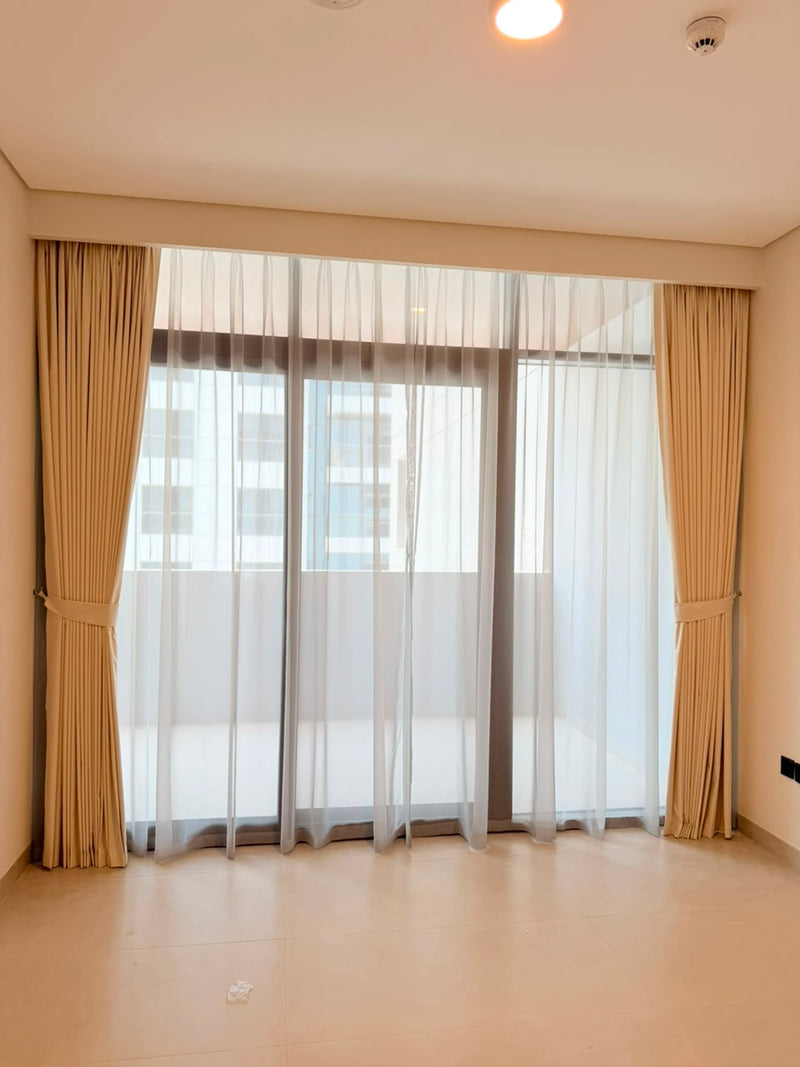
Blackout and Sheer Double Layer
Free measurement & quote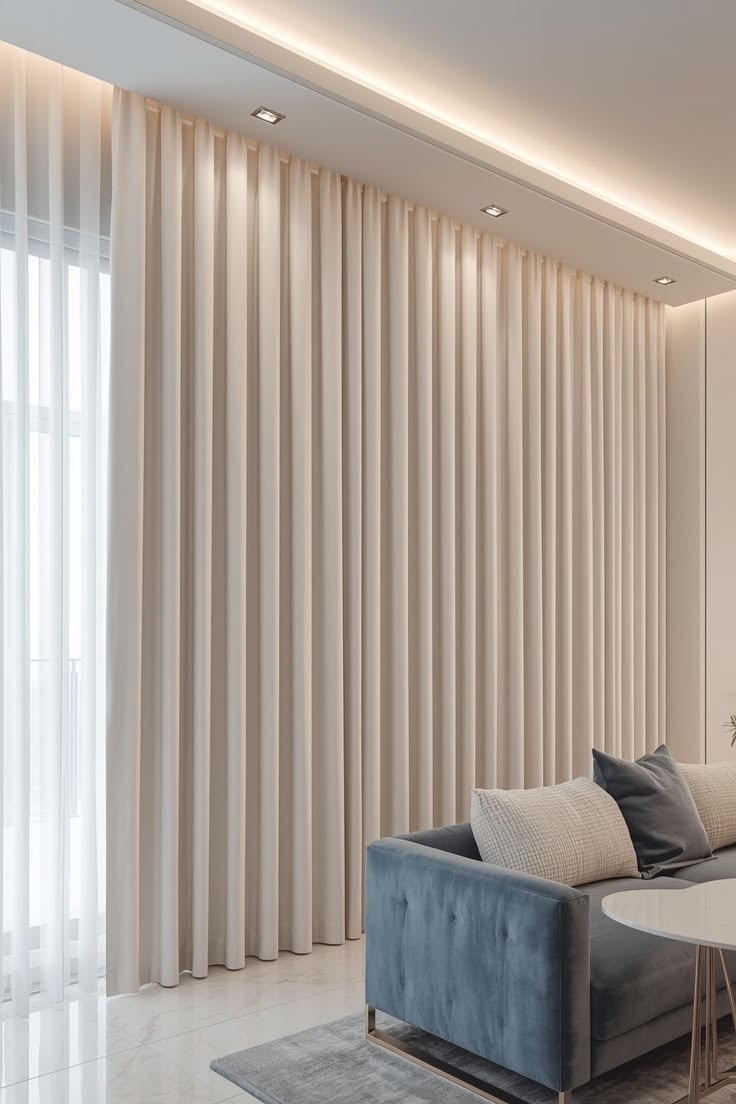
Interlined Blackout Curtains
Free measurement & quote
Dim-Out Curtains
Free measurement & quote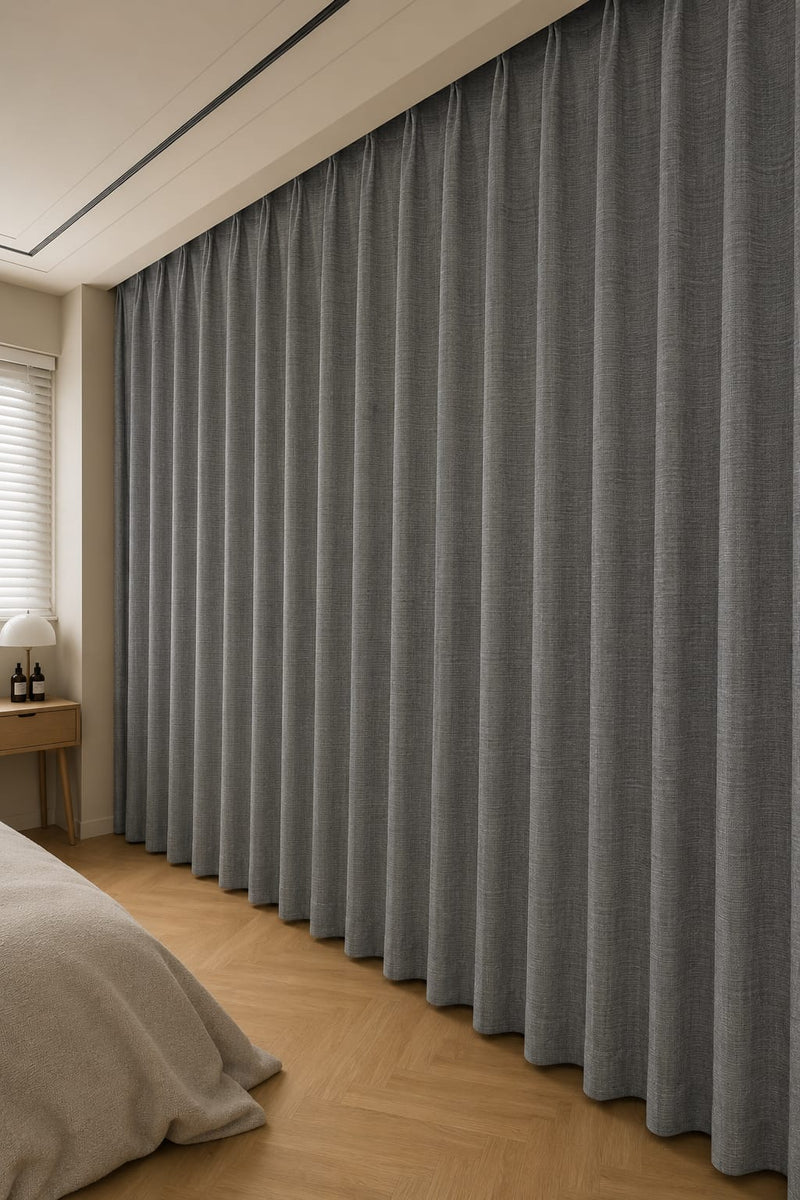
Three-Pass Blackout Curtains
Free measurement & quote
Embroidered Sheer Curtains
Free measurement & quote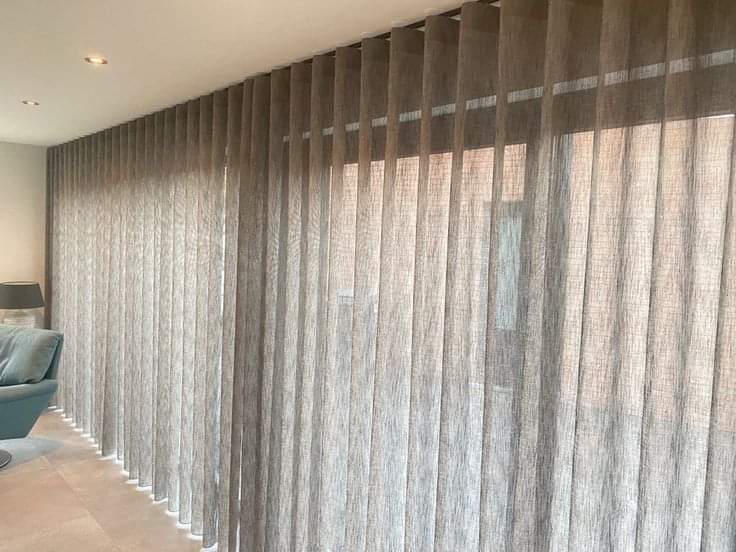
Textured Sheer Curtains
Free measurement & quote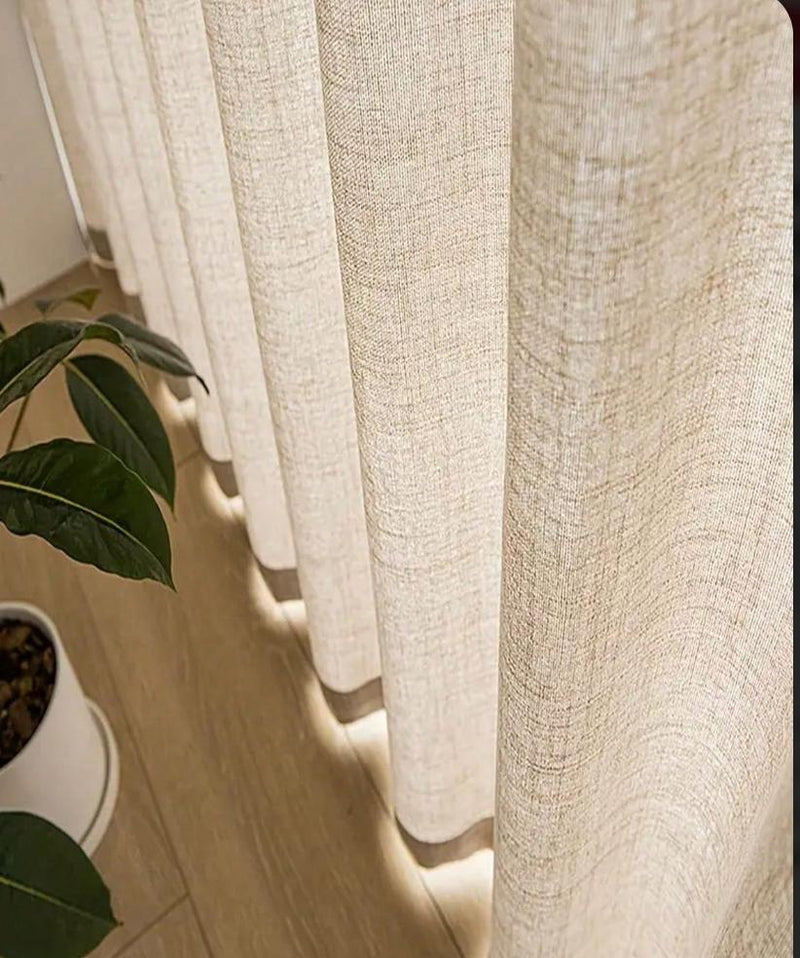
Linen Sheer Curtains
Free measurement & quote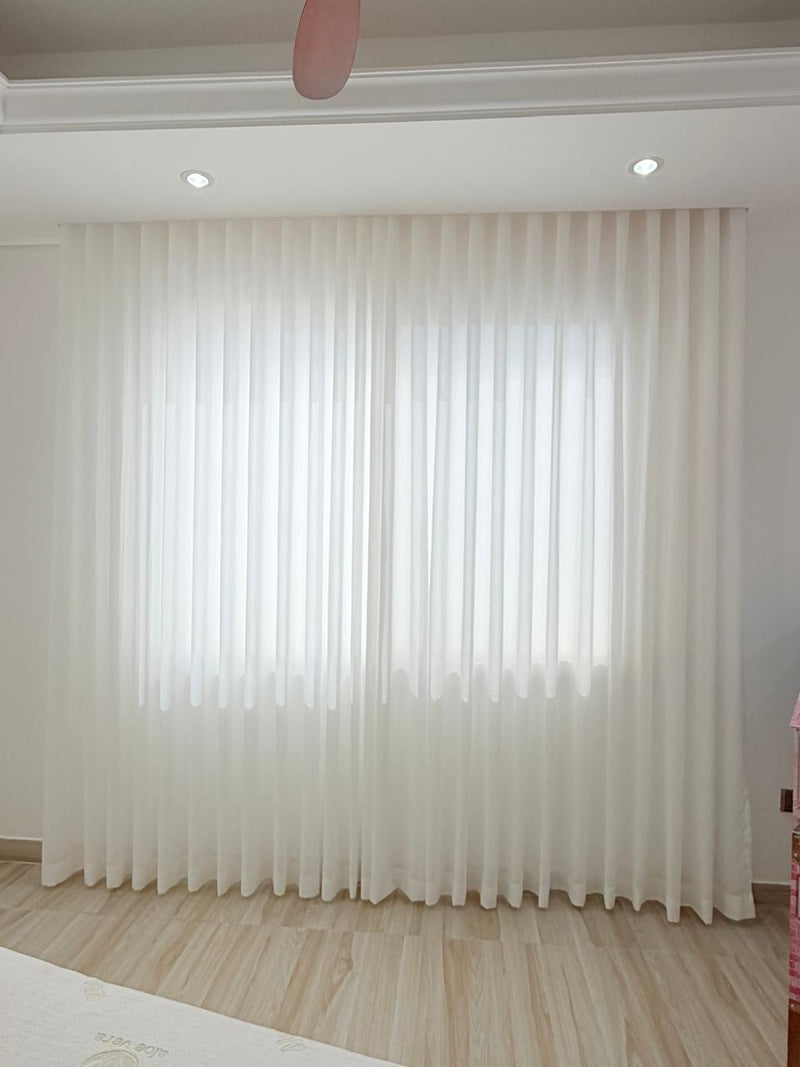
Voile Sheer Curtains
Free measurement & quote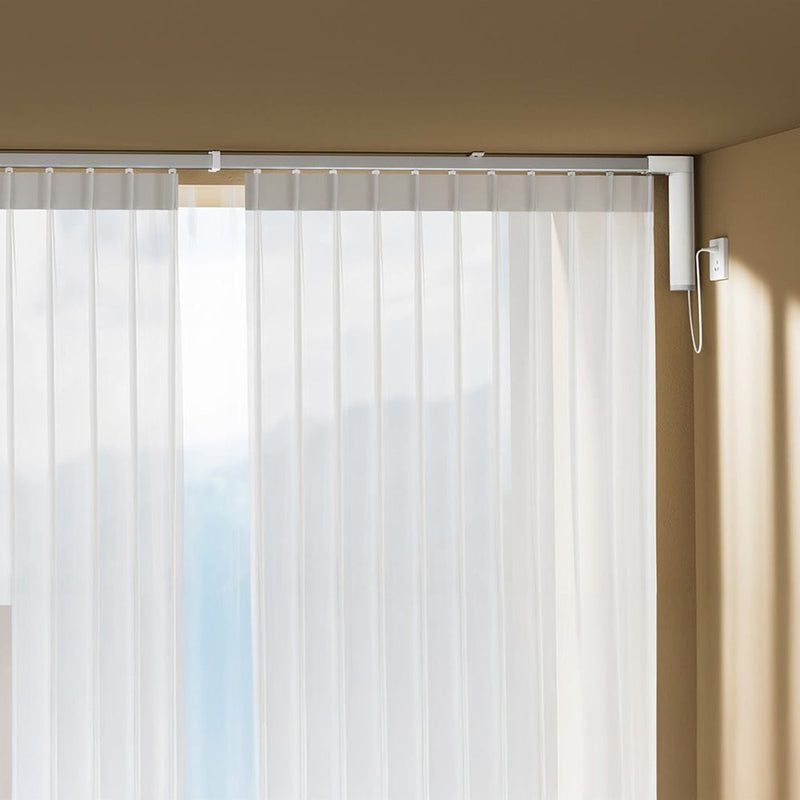
Motorized Curtain Track
Free measurement & quote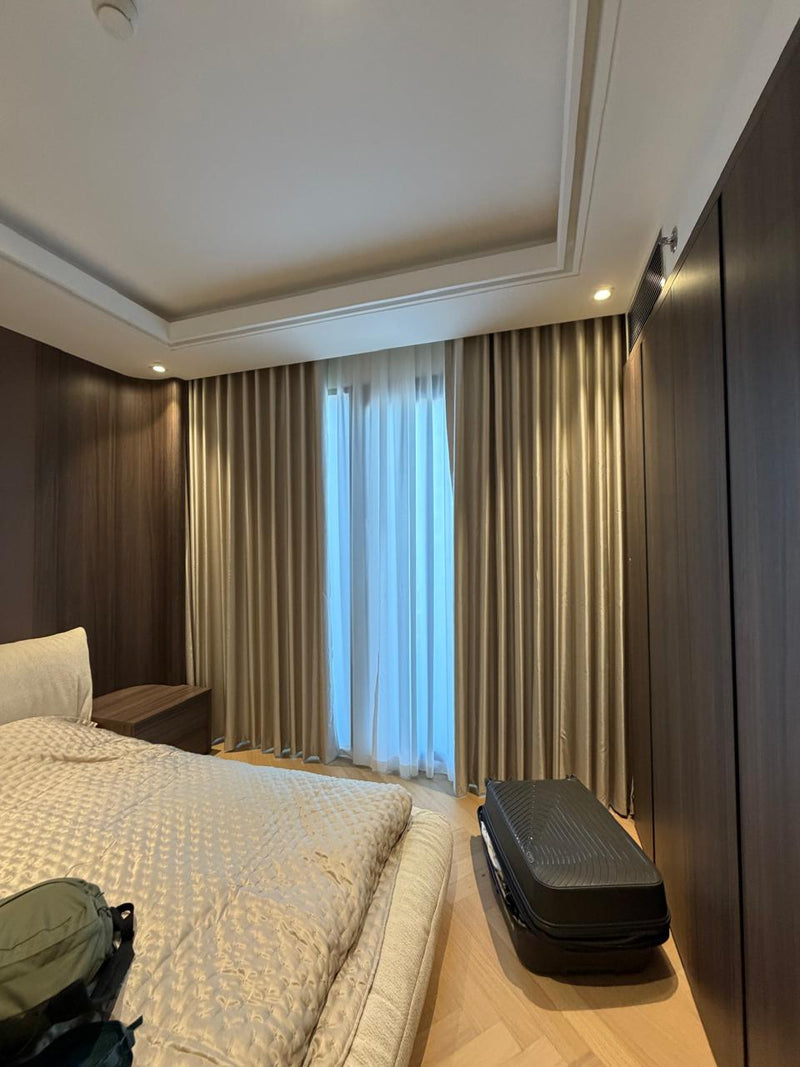
Velvet Curtains
Free measurement & quoteThe order that works runs the other way, from what cannot be changed to what can. What the room actually needs. Then the heading, because it decides the track and the stack. Then the fabric, because the heading has already narrowed what will hang. Then the track and the fixing, because the wall decides what is possible. Every other curtain page in Dubai presents types as a menu, and a menu is how people end up with the wrong curtains.
Step one: what the room actually needs
Not what it should look like — what it has to do. Four questions, answered honestly.
How dark does it need to get, and at what hour? A room that only needs to feel calm in the evening is a different specification from one somebody sleeps in past sunrise. If real darkness is the answer, the lining and the coverage matter more than anything on the front, which is the argument on our blackout page.
Who can see in, and when? Privacy runs from the bright side to the dark side, so it reverses after sunset: a window that feels private at two in the afternoon shows the room in outline by eight. If the tower opposite is close, this is a two-layer window — our sheers page explains what an open weave does and does not do.
How much of the view are you paying for? If the answer is all of it, stack width decides step two, and the track will need to run past the reveal so the curtain parks on the wall, not the glass.
Is a curtain even right for this window? Kitchens, bathrooms and small high windows are usually better in a blind. We fit both, so we have no side to argue — the comparison is in curtains or blinds, an honest answer for Dubai homes.
Step two: the heading, because it decides the track and the stack
The heading is how the fabric is gathered at the top. It is not a styling detail: it commits you to a track system, and it decides the stack — how much width the curtain takes up when fully open. On floor-to-ceiling glass, stack width is what decides between the four.
Wave — one continuous S-curve held by carriers in a corded track. The tightest stack of the four, which is why it suits new towers, and a track system rather than a stitching style, so it cannot go onto a track you already have.
Pinch pleat — fabric pinched into groups at the top. More fullness, more formality, and the widest stack of the four. Right in a villa; heavy against flat ceilings and square reveals.
Eyelet — rings running directly on a pole. The only one of the four that cannot be ceiling-fixed, which rules it out wherever light spills over the top.
Ripple fold — the same system as wave under another name; compare the track and carrier spacing, not the word.
Step three: the fabric — now, and not before
By this point the field has already narrowed, which is the point of the order. Wave wants weight and drape and goes shallow in anything too light; pinch pleat holds a stiffer cloth; anything unlined behind west-facing glass has a short life here.
Beyond that, fibre behaviour is its own subject — what fades, what creases, what holds dust, what survives a decade of sun and air conditioning. That is worked through in choosing curtain fabric for a Dubai home.
Step four: the track and the wall
Decided last, and it constrains everything above it. What is behind the plasterboard is not a preference but a fact, and it either supports what you have chosen or it does not.
Drywall or concrete. Most new Dubai towers hand over drywall ceilings and reveals. A wave track loads every bracket, because every carrier is working, and fixed into plasterboard with the wrong anchor it sags within months — and once a track sags the folds go out of line permanently. We check the substrate at the measurement and specify the anchor for what is there.
Single or double track. If the room needs two layers, the track must be specified for two from the start — a double bracket carries more load and stands further off the wall. Adding a layer later usually means a new track and new fixings, so say so at the measurement even if you fit one layer now.
Motorised or manual. The same rule, more strictly: a cord drive and a motor drive fight each other, so it is specified from the beginning or not at all. Our motorised range covers that choice.
What we would tell you not to buy
Some windows do not need a curtain and we would rather say so than take the order. A guest bedroom used four times a year does not need three-pass blackout. A kitchen window over a hob should have a blind — grease wipes off a blind and settles permanently into fabric. A bathroom the same. A small high window is better in a blind with side channels than in a curtain that swallows the wall around it.
And a corridor window, or a room nobody sits in, may need nothing at all. Everyone in this category will sell you a curtain for it. We will tell you to put that into the bedroom instead — it costs us an order and saves you one you would have regretted.
None of this can be judged from a screen
All of it changes with the direction your glass faces, the building opposite, and your ceiling. So a supervisor comes to your home free, with the fabric books — walks the rooms in the order above, measures every window twice, and says which windows want curtains, which want blinds and which want nothing. You get one written price per finished window within 24 hours, everything inside it, and fitting on the date in your contract. The stages are in how it works, and you can book the free measurement with no obligation.


Good to know
Questions we get asked
You can, and sometimes it survives contact with the window. More often the heading you want will not hold it, or the track needed to carry it changes what the top of the window looks like. Deciding the room’s job first costs nothing and removes that risk.
Usually wave, for the tighter stack and because it suits flat ceilings and square reveals. In a villa or a traditional interior, pinch pleat. The deciding question is how much glass you want cleared when the curtain is open.
It depends on heading, drop, fabric and fullness, and it is always more than people expect. If clearing the glass matters, say so at the visit — the track can run past the reveal so the stack sits on the wall.
Sometimes, and we check it free rather than guess. A standard glider track will not hold a wave, and a track fixed for one layer will not reliably take two. We would rather tell you before you pay than after.
No. Bedrooms and living rooms facing another tower at close range, almost always. On a high floor with nothing looking in, one layer is often enough. The test is what the window does after dark with your lights on.
Free measurement
Let’s start with a free measurement
45 minutes, no obligation. We study the light in every room, measure every window twice, and bring the fabric books to you.
+971 58 663 3160Every day, 10:00 AM – 10:00 PM