

Made to measure
Blackout
No curtain blocks all the light, and anyone claiming 100% has not looked at your window.
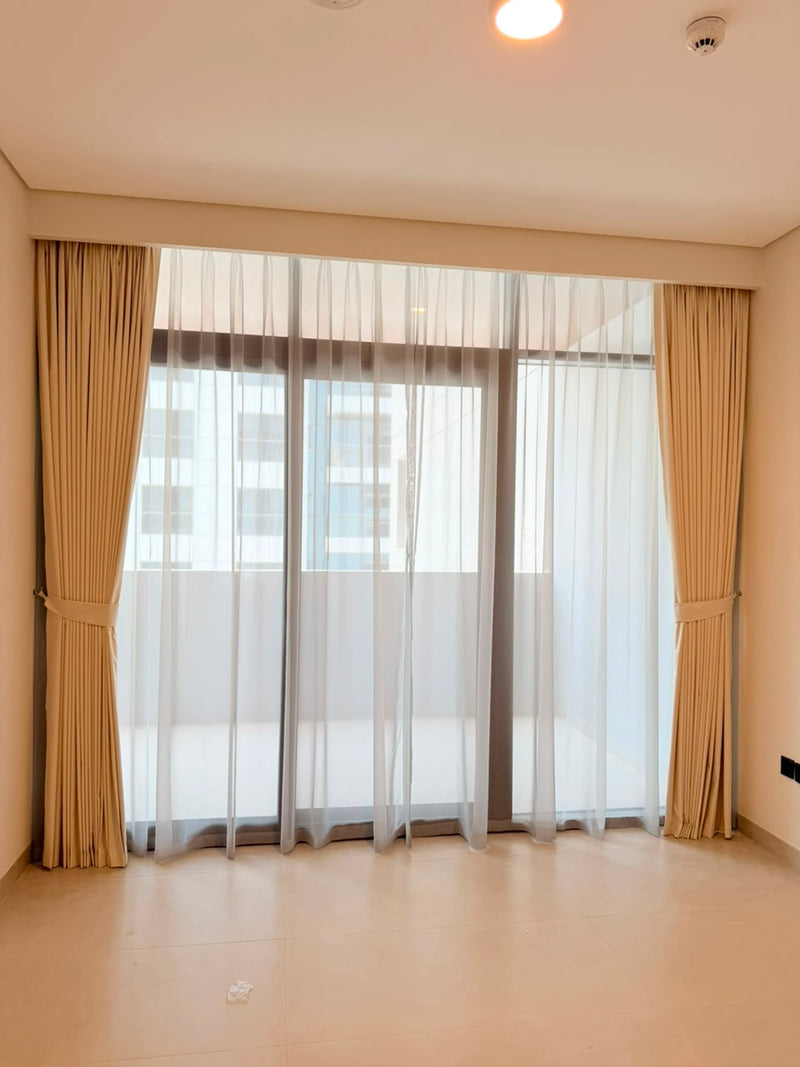
Blackout fabric can be completely opaque — hold it up and you see nothing through it — and the room behind it can still be bright at half past five. Darkness is a coverage problem before it is a fabric problem: light does not come through a blackout curtain, it comes around it.
Compare honestly
The three leaks, and what closes each one
| Leak | Where the light gets in | What closes it |
|---|---|---|
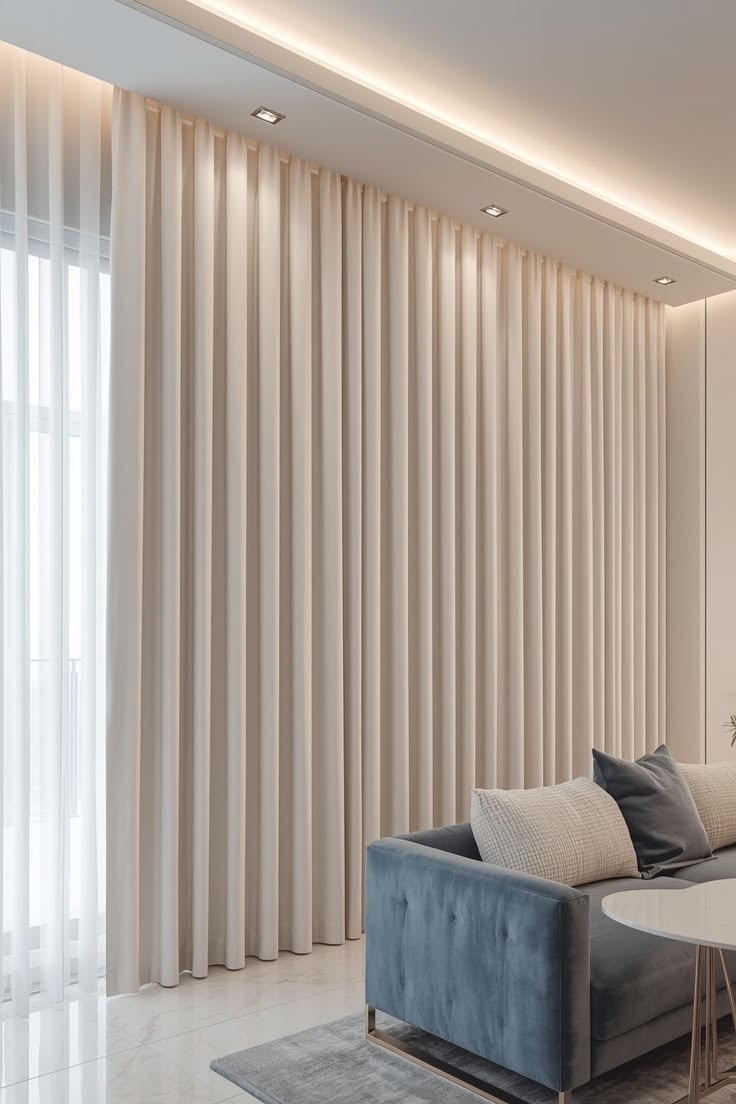
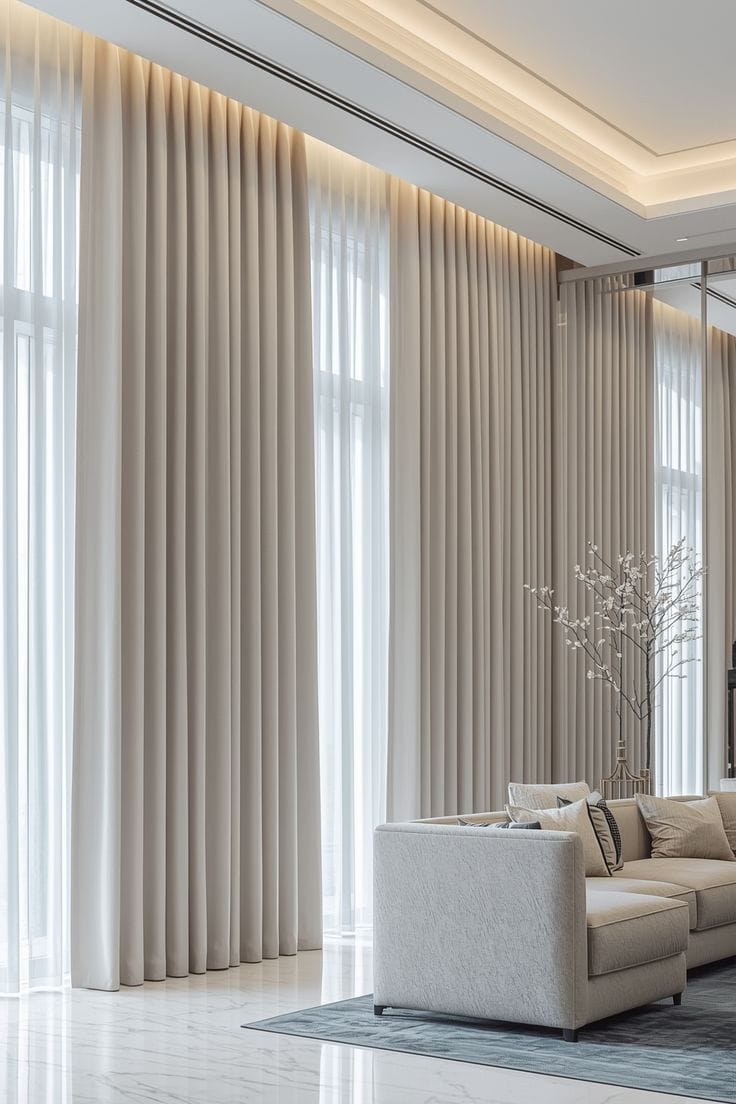
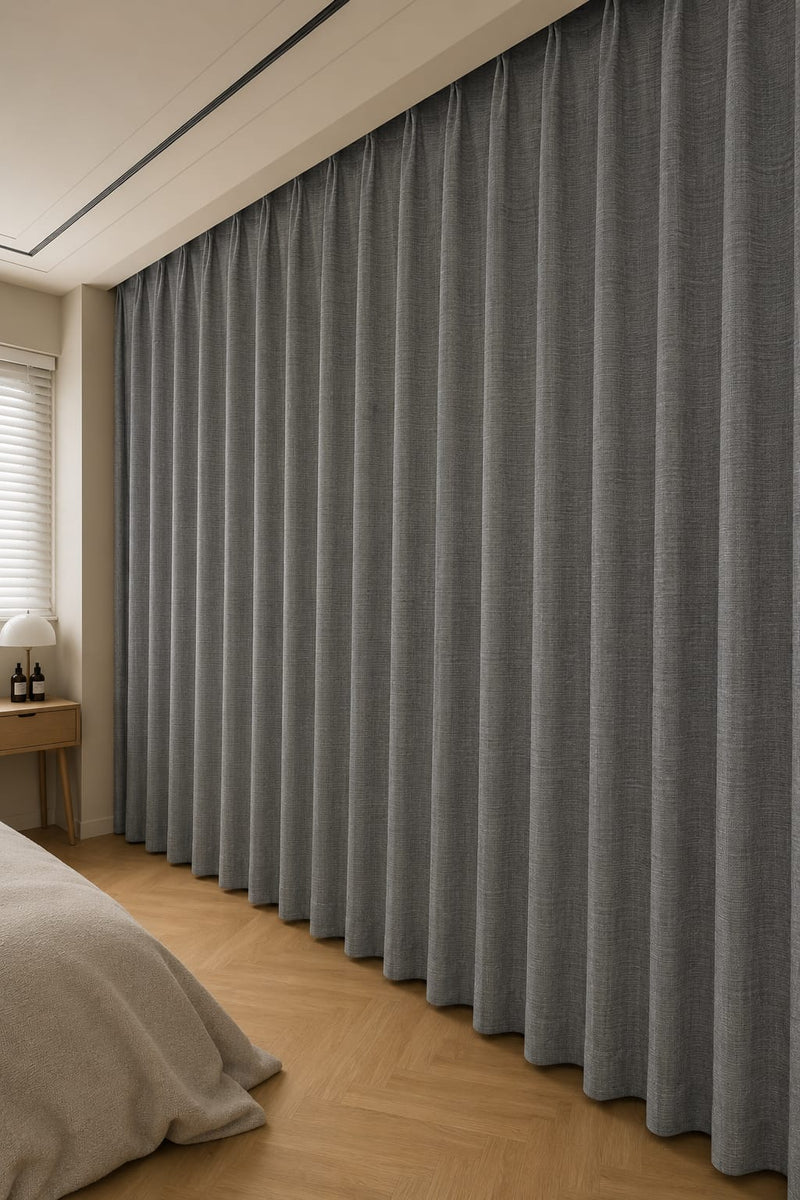
| Over the track | A curtain on a pole, or a track fixed above the window, leaves an open channel along the top. Light spills over the roll of fabric onto the ceiling — exactly where you see it from the bed. | A ceiling-fixed track running from the slab, so there is no gap to spill through, or a valance closing the top. |
| Down the sides | A curtain made the exact width of the opening leaves a line of daylight at each edge, and on a bright morning those read as strip lights. | Width and depth: a track wider than the reveal so fabric stacks on the wall, a generous return bending the fabric back to the wall at each end, and an overlap where the panels cross. |
| Under the hem | A curtain finishing short of the floor bounces light up off pale tiles. | The drop specification, decided at the measurement rather than assumed. |
All three are decided before anything is cut.
Dim-out sold as blackout
The other failure is buying the wrong lining while believing you bought the right one. Much of what is sold here as blackout is dim-out: dense, heavy, uncoated.
The difference is the lining, not the face fabric: a pale fabric with true blackout lining will darken a room that a heavy velvet with dim-out lining will not. To tell them apart, hold the sample to a light. Blackout carries a coating and the light stops dead at it; dim-out is cloth all the way through, and it glows. If nobody can tell you which is quoted, assume dim-out.
Linings, plainly
Unlined — sheers and decorative panels only. Dim-out — dense but uncoated: most of the light goes, a glow stays. Living rooms, guest rooms. Three-pass blackout — three coats of acrylic on the back of the lining, the middle one black; no light passes through the cloth. Bedrooms, nurseries, night shifts. Interlined — a soft layer between face and lining, adding mass and insulation: the most effective thermal upgrade there is. Fade behaviour by fibre is in choosing curtain fabric for a Dubai home.
Why Dubai bedrooms are the hard case
For much of the year the sun is up before half past five, and new towers hand over floor-to-ceiling glass — most people find within a week that they cannot sleep past sunrise.
Daytime darkness is harder again. A room can be dark enough at night and nowhere near dark enough at two in the afternoon for a nap. If anyone sleeps during the day, say so at the measurement — it changes the coverage, not just the lining.
What blackout will not do
It will not stop noise. Fabric absorbs a little high-frequency sound and softens echo. It does nothing about traffic, aircraft or construction, which arrive through glass and structure — heavier fabric makes no measurable difference. If noise is the real problem, the money belongs in glazing.
It will not make a hot room cool, though here the claim is closer to true. On west-facing glass a blackout-lined curtain helps: the coating reflects some radiant heat and deep folds trap still air against the glass. What it cannot do is stop the glass conducting heat, and a curtain on a pole lets warm air rise out of the top.
Dark colour does not darken a room. Blackout comes from the coating on the back of the lining, not the colour on the front, so a pale curtain with three-pass lining performs like a charcoal one. Choose colour for the room; deep shades fade most visibly here.
Blackout behind sheer, on one double track
Most bedrooms and living rooms want both layers. That is a double track, specified for two layers from the start, because retrofitting to a single track usually means replacing it. What the sheer does and does not do is on our sheers page; a wave heading suits both.
Curtains or blinds
Curtains close the gaps more easily; blinds sit closer to the glass and suit small windows and wet rooms. A blackout blind needs side channels to do what a curtain does with return and overlap. The argument is in curtains or blinds.
Room by room
Bedroom: three-pass blackout, ceiling-fixed, with return and overlap. Nursery: the same, hem specified for naps. Living room: dim-out, with a sheer in front. Media room: blackout, interlined. Home office: dim-out or a sheer — glare gone, not the room dark. Kitchen and bathroom: a blind.
How we work
Blackout is the hardest thing to judge from a screen: what matters is the lining behind the fabric and how the panel covers your opening. So a supervisor visits free, with the fabric books, and holds the sample against your own window in daylight. Every window is measured twice.
What the price includes. One written price per finished window, itemised: face fabric, lining, track and brackets, the correct fixings for your wall, delivery, installation and hand-dressing. Nothing is added later, and we fit on the date in your contract, not a range, with a one-year mechanical and labour warranty. See how it works, or book a free measurement.


Good to know
Questions we get asked
No. Dim-out is uncoated and glows when held to a light; blackout carries a coating that stops it dead.
Barely. They soften echo. Traffic and aircraft come through glass and structure, and no fabric changes that.
No. The coating on the lining does the work, so a pale curtain with three-pass lining darkens a room as well as a dark one.
Often yes — a blackout lining can go behind an existing panel, or hang as a second layer if the track takes two.
It helps on west-facing glass, through the coating and the air trapped behind deep folds. It will not cool a hot room on its own.
Free measurement
Let’s start with a free measurement
45 minutes, no obligation. We study the light in every room, measure every window twice, and bring the fabric books to you.
+971 58 663 3160Every day, 10:00 AM – 10:00 PM