

Made to measure
Blinds
The question is not which blind is best. It is which blind suits this window.
Most people start from a photograph and pick the look, then find the window had requirements the look could not meet. Width, how often you open it, whether the room must go dark, and what the wall above is made of settle it faster than any showroom. This page helps you decide; the product pages describe each type in full.
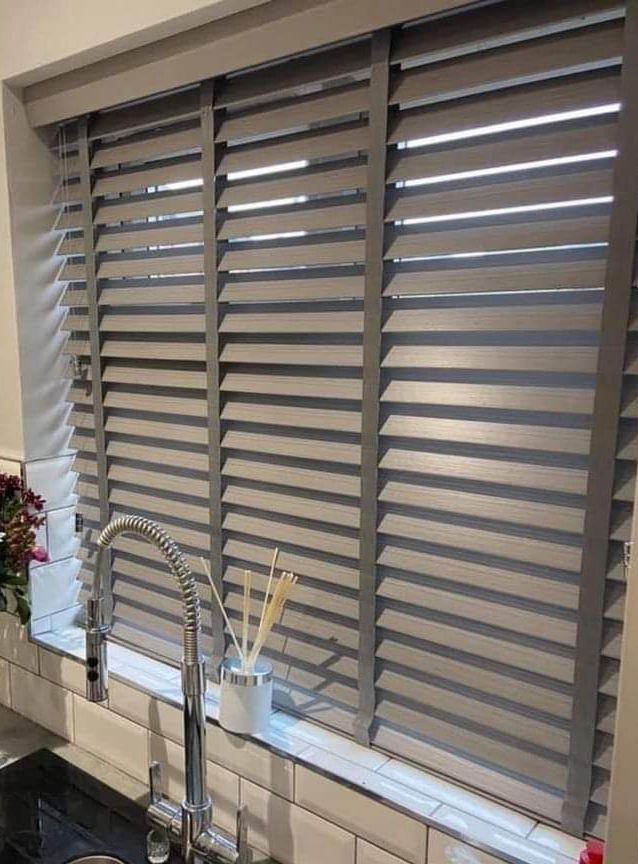
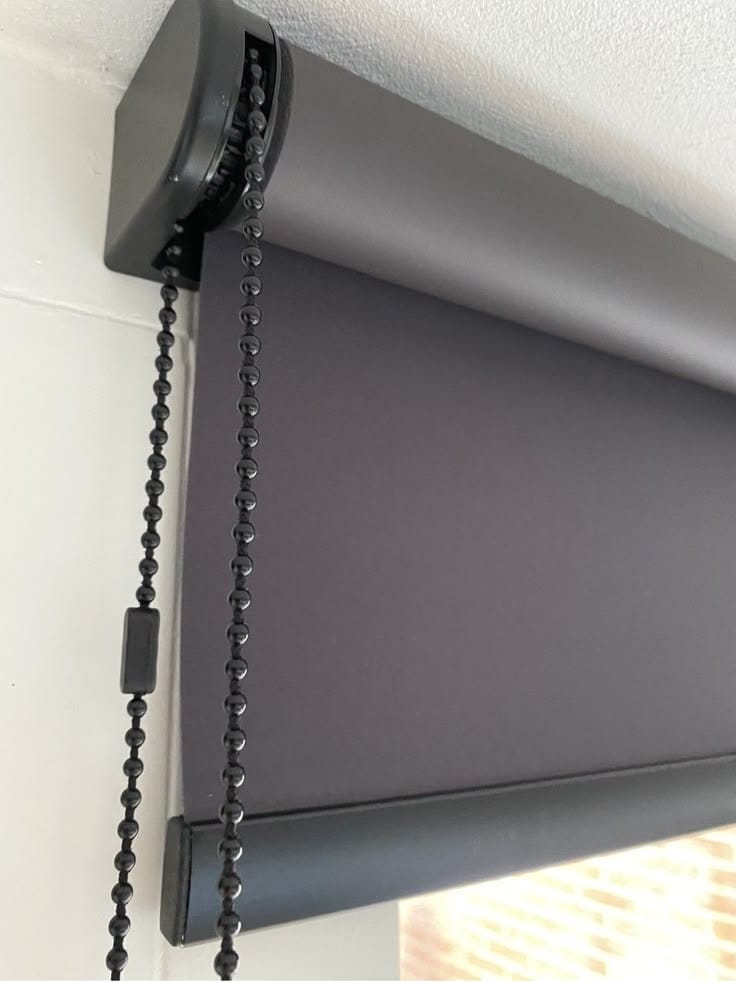
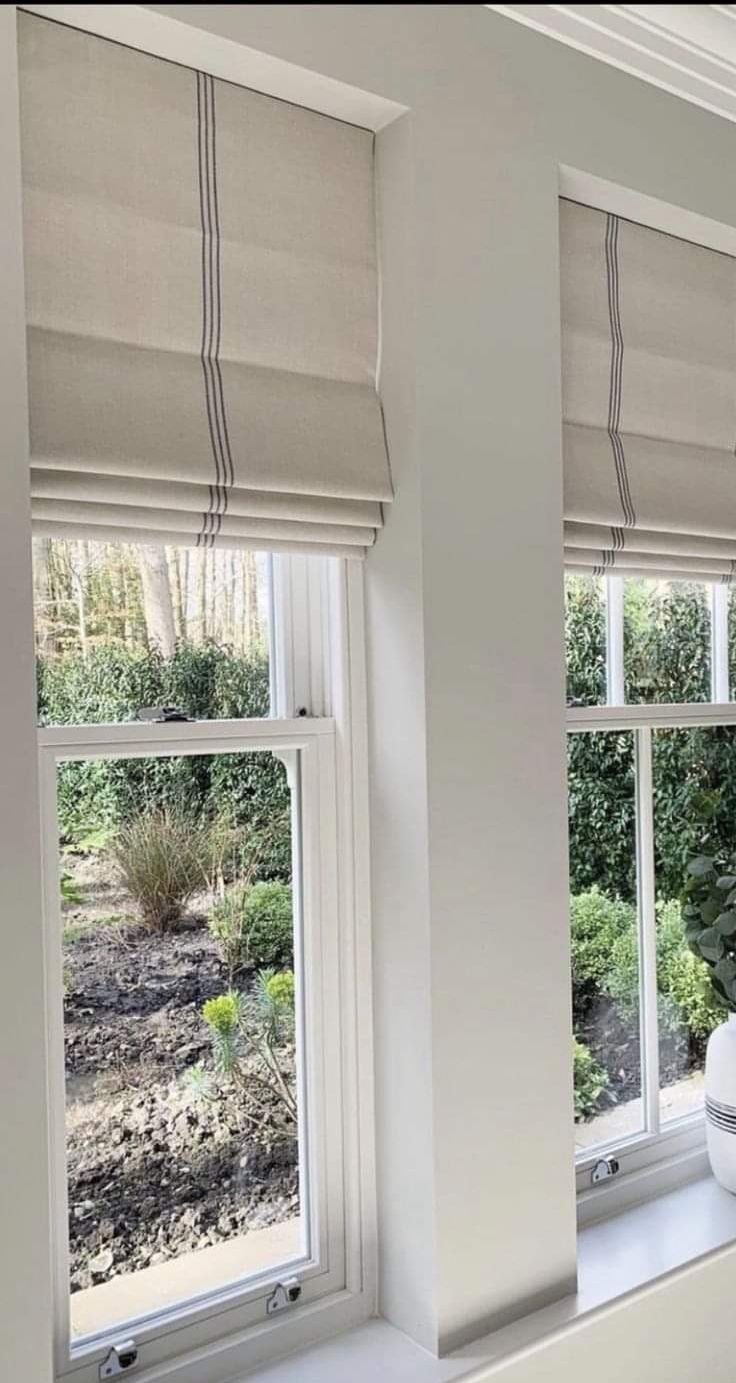
Compare honestly
What we fit, and what each is genuinely for
| Blind | Mechanism | Where it belongs | What it costs you |
|---|---|---|---|
| Roller | One flat panel on a tube: the simplest mechanism there is. | Right wherever fabric would get dirty or be in the way — kitchens, bathrooms, small windows, offices. | |
| Zebra | The same mechanism in a double layer of alternating sheer and solid bands: slide one against the other and you tune the light without opening the window. | Worth it where the light changes hour by hour — a home office, a living room facing a tower. | Not in a bedroom, where a plain roller does more. |
| Roman | A flat panel that folds into soft horizontal pleats — the one blind that reads as cloth rather than hardware. | It suits formal rooms and niches. | Raised, it keeps a permanent stack of fabric over the top of the glass. |
The four things that actually decide it
How wide is the window. A roller carries its weight on a tube and handles a wide span comfortably. A roman hangs the whole weight on cords and a small mechanism, and past roughly the width of a door and a half it lifts unevenly. A wide window usually means a roller, or two romans rather than one.
How often you open it. Mechanisms wear where they are used. A window you set once and leave can take anything; one operated several times a day wants the simplest mechanism available, which is a roller. Anything you walk through — a balcony or sliding door — should not have a blind at all.
Does the room need to be dark. If the answer is yes, the edges matter more than the fabric: side channels on a roller, or an outside-mounted blind with a generous overlap. What darkness actually requires is on our blackout page.
What is above the window. Most Dubai towers have drywall over a stud frame around the reveal, not concrete. Drywall decides where brackets can go and what a blind may weigh, and it is the most common thing done badly here. We check the substrate at the measurement.
Every blind leaks light at the edges
This is the thing the category does not admit, and it is true of all of them. A blind sits inside the reveal and must be cut narrower than the opening to move without catching. That leaves a gap down each edge — about a finger's width — and the fabric can be entirely opaque while those two lines stay bright.
Side channels close it on a roller: a slim track down each side that the fabric runs inside. They must be specified before the blind is made, because the fabric is cut narrower again to suit them, and cannot be added afterwards. Anyone selling a made-to-measure blind with "no gaps and no light leaks" is describing something that does not exist.
Inside or outside the reveal
Inside is the neat fit: flush in the opening, no hardware on the wall. It costs you those side gaps, and on a short window the rolled or stacked blind eats the top of your daylight. Outside closes the edges and keeps the glass clear, which is why blackout bedrooms usually end up face fixed. It costs you neatness: the blind stands proud, can foul a handle, and needs sound wall to fix into.
Cordless in any room a child uses
This is a policy, not a feature. A looped chain or cord within reach of a small child is a real strangulation hazard, so in any bedroom, nursery or playroom we fit cordless or motorised as standard. We will not install a corded blind in a child's room.
Where blinds beat curtains, and where they lose
They win wherever fabric would get dirty or be in the way: kitchens, where grease and dust wipe off a flat surface but never come out of a curtain; bathrooms, for the humidity and the lack of wall to stack onto; small windows, where a curtain swallows the wall; offices, where glare needs tuning through the day.
They lose on floor-to-ceiling glass, where one wide blind reads industrial and runs those edge gaps the full height of the room, and on heat, because a blind is a thin layer close to the glass with no trapped air behind it. The room-by-room argument is in curtains or blinds.
Room by room
Kitchen and bathroom: roller. Bedroom: roller with side channels, or a roman mounted outside the reveal. Home office: zebra, for glare that moves. Living room: usually curtains, sometimes a blind behind them. Formal dining or a niche: roman. Balcony door: not a blind.
How we work
Blinds are unforgiving of a millimetre: a few out and you get a permanent light gap down one side. So a supervisor visits free, with the fabric books, and every window is measured twice. One written price per finished window within 24 hours, nothing added later, fitted on the date in your contract, not a range, with a one-year mechanical and labour warranty. Any remake caused by our measurement is at our cost. See how it works, or book a free measurement.


Good to know
Questions we get asked
A blackout roller with side channels, or a roman mounted outside the reveal. Both close the edges; fabric alone will not.
No. The fabric does; the gaps at the sides do not. Channels or an outside mount make a room properly dark.
Yes, and we insist on cordless or motorised. We do not fit corded blinds in children’s rooms at all.
A roller goes wide comfortably. A roman does not — past a certain width the lift goes uneven, so we fit two.
Usually curtains, for the softness and the heat. A sunscreen blind behind them earns its place on west glass.
Free measurement
Let’s start with a free measurement
45 minutes, no obligation. We study the light in every room, measure every window twice, and bring the fabric books to you.
+971 58 663 3160Every day, 10:00 AM – 10:00 PM